Monday, 27 September 2010

The Bridge on the Drina


We were excited when we realised we would pass through Visegrad on our way to the Croatian coast. We had picked up a translation of "The Bridge on the Drina" by Ivo Andric before we left Scotland and read it as we were traveling and both loved it. The novel recounts the 400 year history of the bridge in Visegrad and its people in a fictionalised but deeply researched historically accurate way. Andric spent his youth in Visegrad and the novel gives vivid descriptions of the beauty here and the characters and conflicts of its inhabitants.  The writing is beautiful and  gives sympathy, warmth and depth to all the towns inhabitants of Christians, Muslims and Jews without shying away from the tragedies the town saw. He won the Nobel prize in '61 for the novel and it seems so deserved, it beautifully describes aspects of the culture and historical roots of the conflict in this part of the world.
We felt so attatched to the town from reading the book we were heartbroken to hear the troubles there where by no means over once the novel's narrative ends as WW1 begins. The bridge itself saw horrendous atrocites only last decade. Once we arrived in Visegrad however things felt peaceful yet vibrant. The cafes were friendly and buzzing and there were lots of young people about. An old railway line that takes you through the mountains had been reopened to be used for a scenic steam train only a day before we arrived. The town seems proud of Andric with libaries and cultural centres dedicated to his memory and a memorial overlooking the ancient bridge.

Rakija at our campsite by the Drina

Saturday, 25 September 2010

Serbian drawings


 I told Slobo and Zdravko i'd draw them - sorry guys, they are way less wonky looking in real life!
jenny's drawing of a romanian boy fishing.

oh serbia!

We spent a few days battling some long steep climbs in the northeast of Serbia. The ride was beautiful and we had fun stopping at a stream for lunch where as usual Matthew got right in. Some of the larger towns in the north felt downtrodden and depressing, and we passed a few closed swimming pools, huge empty hotels and we felt sadly the sense of being somewhere that has seen better times. The people in this part of Serbia oggled us in a similar way to people in Romania and we were getting a bit tired of feeling like some sort of shocking spectacle as jaws dropped and eyes popped wide open when we cycled past people, without a hint of a smile. I felt a bit mean and impatient for getting tired of the stares, especially when right across Serbia we had lots of positive attention too with people waving and cars tooting / giving us a thumbs up. Whenever we started to get down, something good would happen to pick us up like a sweet old man putting a pile of plums into my bicycle basket. We often joked that Serbia was an emotional rollercoaster, as we swung between feeling like weirdo strangers to feeling a deep connection with or admiration for various wonderful and special people we happened upon. These encounters made me feel more attached to Serbia than any other place we have cycled. Also, Serbia is a very beautiful place, with varied landscape ranging from soft and pretty countryside to rugged, gorgeous mountains and forests. We didn't realise how beautiful it was going to be before ambling across it.

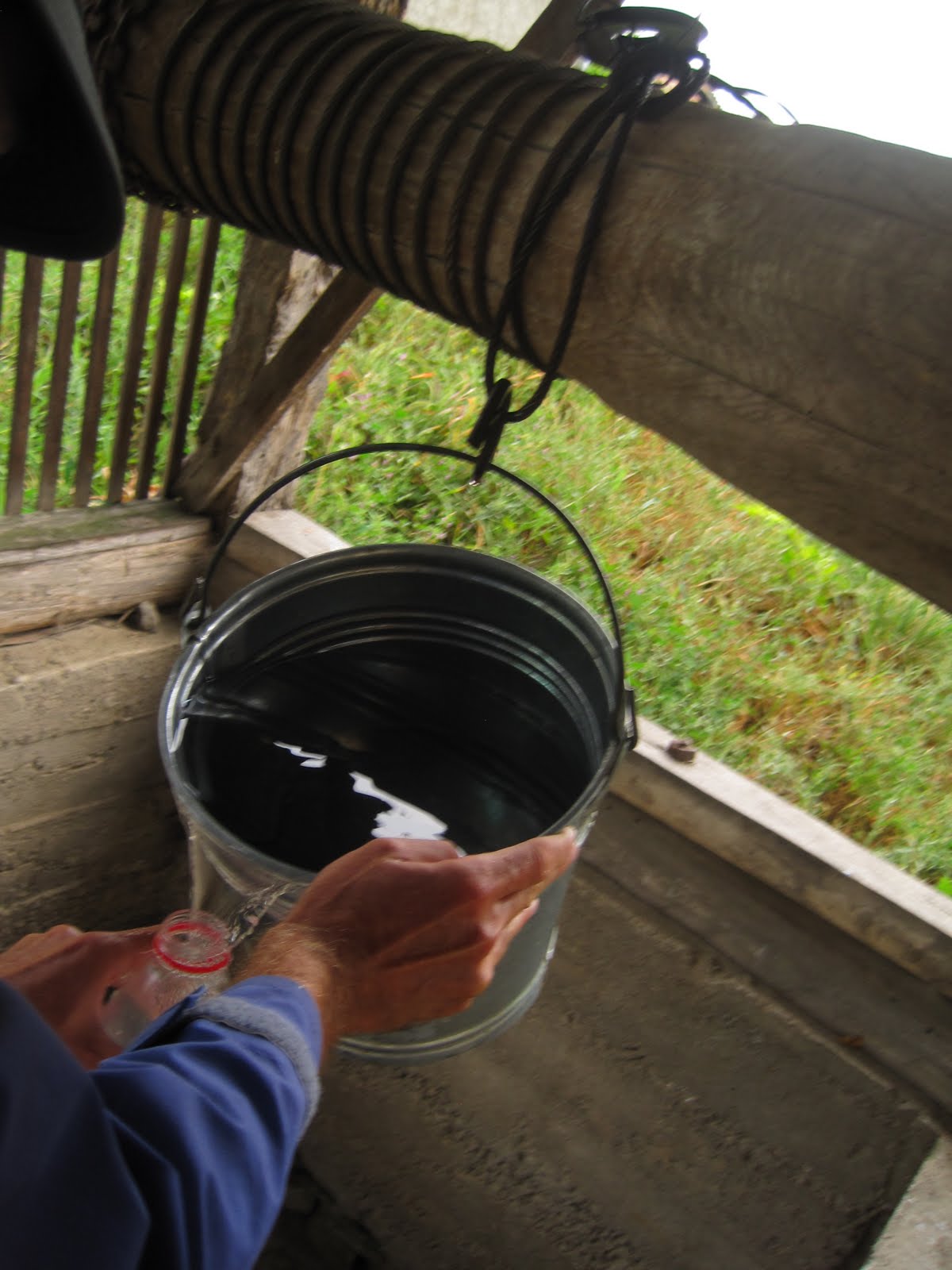
As we were nearing the Bosnian border, we met a cyclist called Zdravko while bumbling around his home town Pozega wondering how to get the back way (i.e. avoid the highway) to nearby Uzice. Zdravko was out cycling and stopped to chat as we stood in usual hunched-over-the-map fashion. He offered to show us the way to the back road we were searching for and we chatted as we cycled along. Zdravko ended up escorting us the whole way to Uzice, and contacted his friend Slobo who joined us there. On the way he showed us some of the local fruit which can be picked from the roadside - beautiful crisp apples, small sweet oval plums called "shliva", and walnuts which we were given by a lady gathering them from the ground next to the road. People here eat wonderful food, so many apple and plum trees we pass are brimming with fruit which falls onto the roadsides and while the available fresh produce is not very varied, it all tastes amazing. Zdravko also told us that the water here is exceptionally clean and good, and very accessible for a cycle tourist as it runs from mountain streams to roadside fountains. Zdravko loves Serbia and its people but regrets the current state of unemployment and migration caused by the wars and bad politics. In Uzice, we had a great time chatting to Zdravko and Slobo, with Slabo speaking excellent English and helping us to communicate better with Zdravko. Zdravko also was keen to show us rakija, a drink made from the little shliva plums we had tried earlier. This is a spirit with about 40% alcohol content yet was surprisingly sweet and nice. As we were leaving, Zdravko and Slobo very kindly showed us on our way by cycling a few kilometres with us out of town (uphill and in the rain!) we were so grateful for their help and also for the fun time we had chatting and learning more about Serbia.
Slobo, Matthew and Zdravko

me and bobby mcgee

We pedalled back to Serbia over the Iron Gate bridge/dam on the Danube. It felt good being back in a country we were already familiar with, hello again Serbia! And hello nice Serbian cafes, coffee, figs, fruit...

Our next bit of riding took us along the same section of the Danube gorge we had cycled in Romania, but this time on the other side of the river. It actually looked quite different from the other side as the road is up a lot higher, cut into the cliff.

We broke away from the Danube and found ourselves cycling through pretty countryside and lovely rural towns and villages with regular sightings of horses & carts, shepherds and copious haystacks. Wild camping was lovely here and we woke to magical, misty mornings.

Cycling through a Serbian village one day, we paused to peer up the streets trying to see whether there was a shop around so we could buy some snacks for lunch. A man yelled out from his nearby verandah (in English) to see whether we needed help, and directed us to the local shop. He then asked us if we knew Janis Joplin's version of Me and Bobby McGee, and went on to declare that I was "me" and Matthew was Bobby McGee. A bit cryptic, but we were pleased with the comparison. Cycling feels so wholesome and peaceful that it is refreshing to hear that someone (albeit a middle aged, rural Serbian)  thinks we look hip and rebellious. But here's hoping our adventure ends less bleakly than the song.


bobby mcgee


bye bye Danube

Friday, 24 September 2010

Romania on wheels

We were greeted in  Romania by a lovely soft afternoon light.  A mist hung in the air  even though it was sunny and warm giving everything a soft focus. The dryness of the north of Serbia gave way to lush wild grazing land with forest and teepee hay stacks. It felt like we had entered a  fairy tale land but one perhaps without rubbish collection. Even next to beautiful fresh mountain streams and remote pockets of the Danube were piles of modern waste like cartons and plastic. It added to the wildness perhaps and didnt bothered us but it felt a bit sad in such a  pretty and otherwise untouched place. A reminder of  the ugly side of the modern world starting to affect people here. 

    We passed through small villiages that felt back in time. Everyone out in the street at dusk chatting  on doorsteps, knitting, shelling peas,  herding goats, playing the accordian for chickens scratching the dirt. It felt unreal , like a movie set,  like ye olde land theme parks back home.  That first day everyone waved and seemed quite interested in the weirdies on  bulky bikes. Were we the unreal ones perhaps? Rolling out of a film set and into real life. Strange aliens with bright clothes and all our teeth.  Their lives definately did feel more real and tangible when we pondered the locals we passed. We cycled past one man as he sat watching his three cows grazing on a patch of roadside grass. To make your living back home how many hundred cows would you need? How strange this excess would seem to this guy. You get the feeling  he would be baffled why we should bother. I think it would make little sense to him to lose the time he spends relaxing with friends or meditating on his grazing animals just to get  our extra gadgets and brand names. Who knows perhaps he would have sold his wife for an Iphone but it didnt feel that way. It seems there is little to nil sense of entrepreneurial drive here. If by chance he did get his hands on that much milk produced by a commercial dairy he would probably invite the village over for a milk swim  soundtracked by wild gypsy music that would stretch on for days............

This all sounds so idyllic but we both agreed after a few days here how difficult we would find living in a small Romanian village. The quote about not wanting to go to heaven because it sounds boring springs to mind.  Perhaps we are too addicted to modern life and stimulation, stifled by the slow pottering pace, slightly creeped out by the unabashed wide-eyed stares (are we really that interesting!!)To an extent we had to make assumptions about what the people were like and what sort of things they discussed as we were unable to talk to anyone, but we got the impression that they were immersed in their rural, traditional, day to day  lives  without much interest in reaching out to the outside world.  Shepherds sitting staring vacantly at goats, old ladies with eyes glazed watching the road. It wasnt so much that that they were that  cut off from the outside  but more perhaps that it didnt interest or captivate them. We didnt notice many people reading a paper or having animated discussions as we did in Serbia. This was in rural Romania away from bigger centres and we did meet a few more cosmopolitan people here but the overall impression of life in this part of the world was slow, traditional and from what we could tell, mostly content. Our claustrophobia at this life surprised us and was a little confusing.  Perhaps it showed us how much we value access to ideas and openness to change? Or perhaps it's just not very nice to be stared at all day?


Although we did experience this form of culture shock we were very glad we made the effort to see  Romania. The Danube is easily it's most stunning in this section with high gorges and dense forests. We had been told the road quality dropped considerably once entering Romania but for our route we found it fine. We could see that during heavy rain some sections of unsealed road may be difficult but it was just a little bumpy in the dry. A lot of road work seemed to be taking place while we were there to stop mud slides so perhaps it will be a lot better in the future.  As I mentioned earlier you pass many lovely little rural villiages with brightly coloured houses but their are also some pretty desolate scenes of industrial decay. Huge power stations and other factories like crumbling  skeletons. We found out later that after the soviets privatised industry it was often sold off to people looking for a quick buck. They would buy it cheap, strip it of any machinary and materails to sell on then leave the remains to rot. The blocky flats nearby these still housed communities but seemed grim places caused, we assume, by the work the factory provided vanishing. The lovely river at the door step of these otherwise concrete eyesours does seem to be well used. There wasnt many sections were we could stop and look down to the waters edge and not notice a group of men or a family fishing or BBQing their catch.  It seems the EU is concentrating on getting business going in this area by providing loans and grants. We noticed signs in Romanian stating the EU's contributions at many new buildings along the way. It seems like a good investment, especially if more tourists got to know the unique beauty of the region.
We stayed in a village on our last day in Romania close to the spectactular narrowest point in the gorge where the Danube is forced between the cliffs. It was in a  guest house run by a family who lived during the week in a bigger centre to the north and  come down to run things here on weekends. The father had a little English and spoke French so we could ask him a few things about what we had seen. He was very friendly and welcoming and seemed easier to relate to than the rural people we had passed on the prevous days.  He  made us an amazing banquet of tradition Romanian  breakfast consisting of a Polenta and cream porridge, eggs, cheese and preserved figs followed by a shot of fig brandy! It was lovely to sit and eat in his homely cafe as he played 60s french pop songs, with dogs, his little boy and a pet fluffball rabbit popping in and out.
 urban decay in the middle of natural wonder
huge carving of early romanian king


We rode on the second day in Romania all through the morning and early afternoon without coming across a shop for food supplies. Feeling hungry we cycled up a steep hill to a village above the river and were greeted with manic gypsy music. The whole town was out for a wedding of a young couple in the school sqaure and a band was playing for the dance. The guests were dancing quite formally to the wonderful wild music, and most of the village seemed to be out watching the event from above. We pulled in and joined the others out watching. An excited uncle-type character worked his way around the rows of spectators sharing shots of some clear strong liqueur. Not having eaten all day it went straight to our heads and we wobbled back down the hill once the dancing stopped. Great party!


soviet hula hoop?

Tuesday, 21 September 2010

romania mania

some photos from beautiful, wild Romania.. more pictures to come soon (and next post with more words describing our impressions (currently overstaying our welcome at cafe with wifi))